Healthcare organizations generate massive amounts of data daily, whether in electronic health records (EHRs), various clinical and business applications, patient and provider portals, medical devices and wearables, and other operations and business systems and processes.
Despite the abundance of data, many healthcare personnel still rely on outdated reporting systems to access the data and reports they need to make decisions. Many still rely on batch reports and processing to make critical decisions.
As the healthcare industry continues to be data-intensive and decision-making becomes more complex and dynamic, organizations should have real-time insights into clinical, operational, and financial performance to gain a competitive edge.
This is where data modernization is crucial.
Challenges of Legacy Reporting Systems
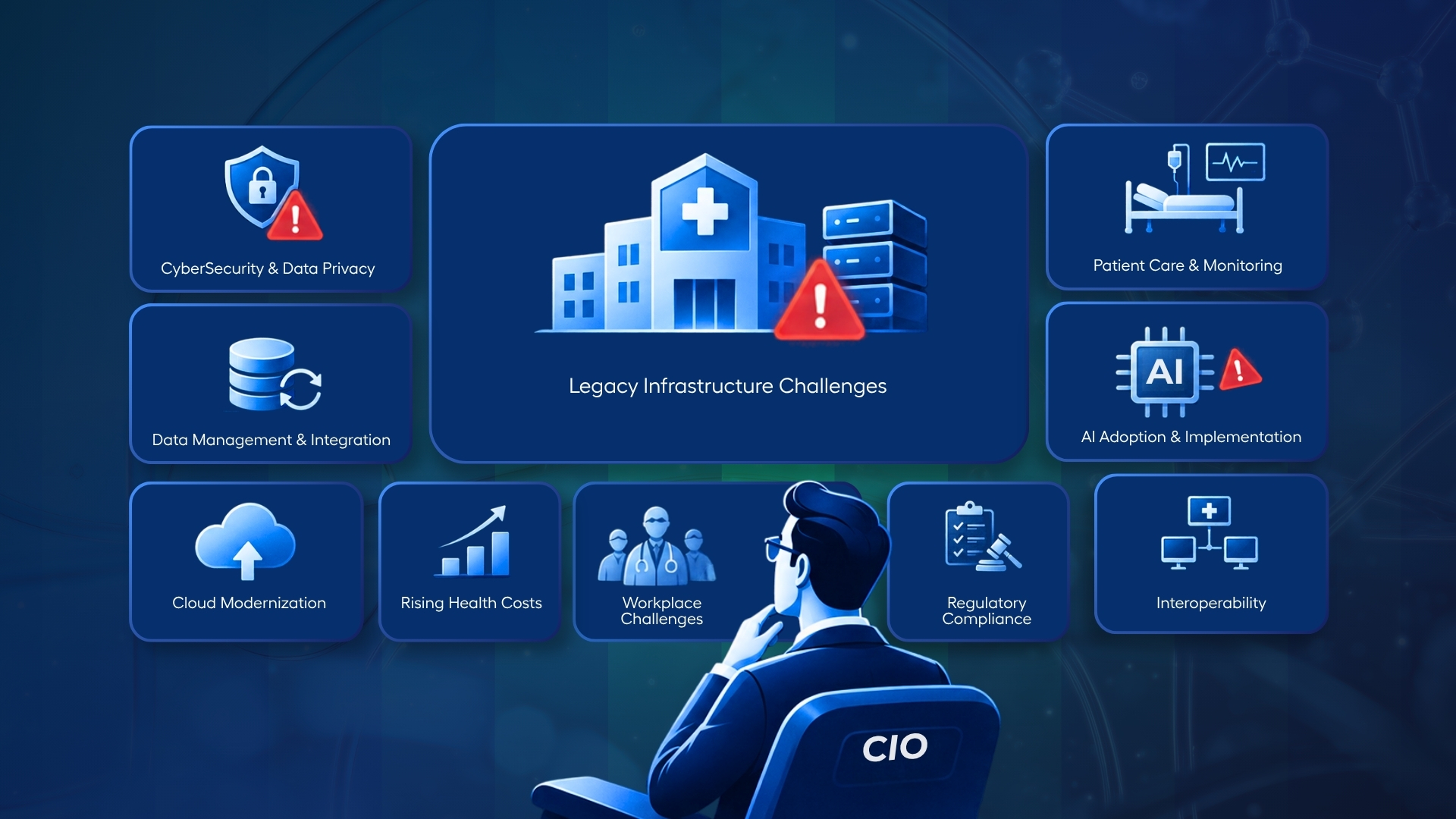
The systems and processes which enabled reporting a few years ago within healthcare organizations for significantly different data and systems landscape remain unchanged for many organizations.
These legacy systems have numerous challenges including:
- Inability to scale with the business
- High operating costs
- Lack of flexibility to adapt and change
- Rigid data and system integration
- Long processes for extraction, reporting, and distribution
- Difficulty supporting current and new business needs
Real-Time Insights in Healthcare
In healthcare, there are several examples with lags in accessing critical information. Processes and systems are often optimized for throughput vs. accessibility.
Healthcare leaders need timely insights to:
- Monitor Patient Flow and Capacity
- Optimize Staffing Levels
- Track Financials
- Close Care Gaps
- Improve Resource Utilization
- Support Regulatory Reporting
- Enable Data Driven Decisions
Analytics provide the ability to shift from a focus on historical data to insight on timely data. Healthcare organizations that achieve real-time analytics become proactive instead of being reactive.
The changes in the healthcare industry are disruptive and affect all levels of the organization. The ability to quickly and accurately make informed decisions is critical to the success of the organization.
What is Healthcare Data Modernization?
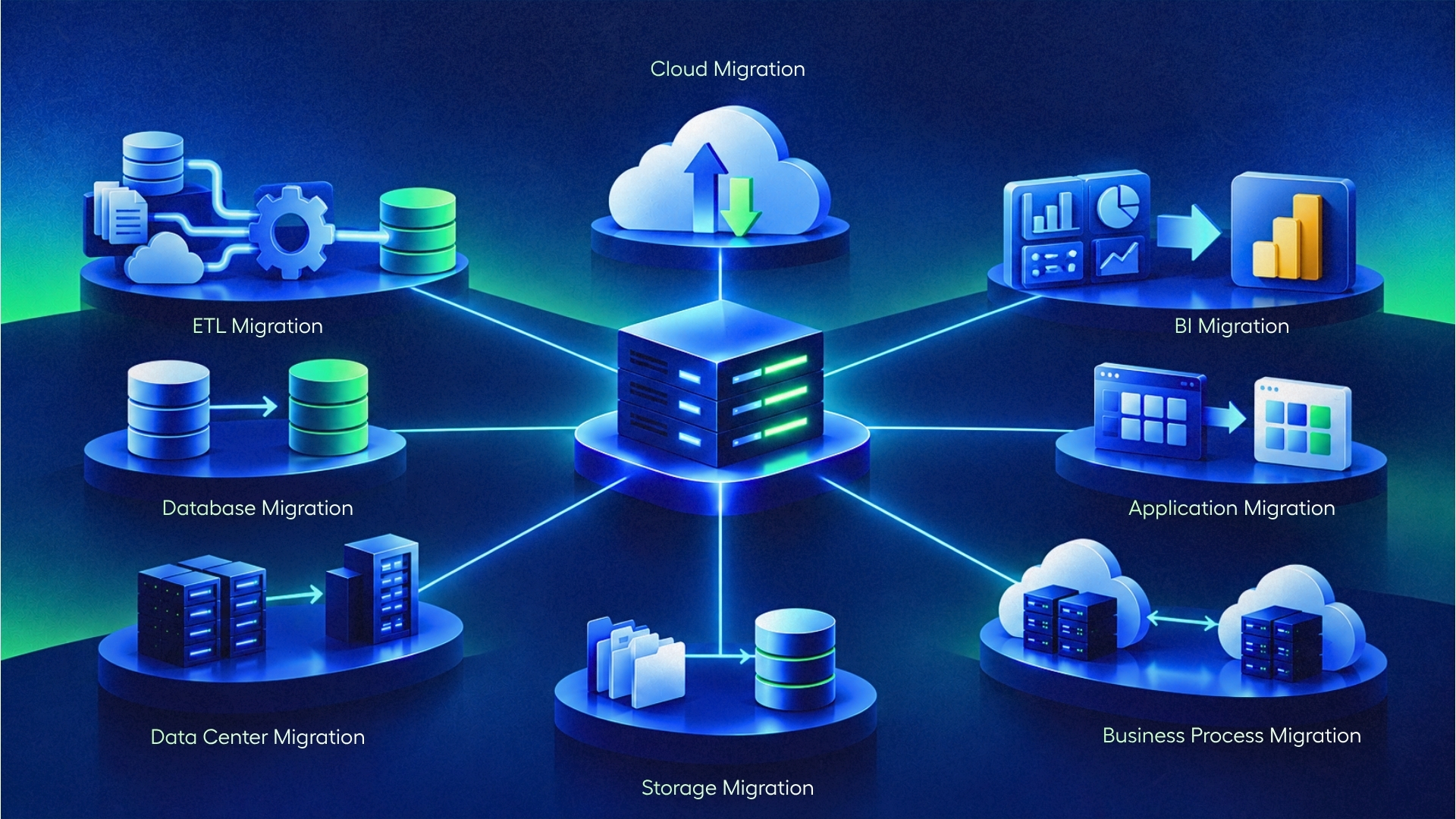
Data modernization is the process of transforming dated data infrastructures into more flexible and integrated architectures that allow for advanced analytic capabilities.
Rather than depending on various different data systems that require high levels of manual data work to make decisions, organizations can implement modern data and analytic platforms to enable more efficient, secure and controlled data access and sharing.
Healthcare data modernization encompasses many elements, including:
Unified Data Integration: Data is accessed from multiple source systems.
Flexible and Scalable Architecture: Data is hosted on a secure and scalable platform.
Advanced Analytics: Data and analytic capabilities allow for advanced predictive analytic functionality and self-service reporting.
Data Governance: Data quality and security are essential for compliance.
Real-time Reporting: Stakeholders have access to data at the moment they need to make decisions.
Key Benefits of Data Modernization
1. Faster Insights
Historical data has no value if it can’t be reported in a timely fashion. With modern data architectures, access to data is greatly reduced, and data can be reported at the time it is needed by the end user.
2. Better Patient Outcomes
Data that allows for integration across all touchpoints enables clinicians to deliver better care and improve outcomes.
3. Enhanced Operational Efficiency
Healthcare companies can analyze data to find operational inefficiencies and improve the allocation of resources and the flow of work.
4. Stronger Data Governance
Modern platforms can improve the quality, consistency, and compliance of data governance.
This is even more critical as healthcare companies broaden their adoption of AI and advanced analytics.
5. Reduced Reporting Burden
Healthcare employees can spend less time creating reports and more time analyzing data to gain actionable insights.
The Role of Microsoft Fabric in Healthcare Data Modernization
Healthcare companies want a simpler and more unified analytics platform to help them manage their data while also enabling them to perform advanced analytics.
Microsoft Fabric does data integration, engineering and data warehouse modernization, as well as real-time analytics and data science and BI in one package.
This helps healthcare organizations:
- Eliminate data silos
- Achieve a single source of truth
- Accelerate reporting and analytics
- Build an AI-ready data foundation
- Improve collaboration
- Simplify data governance
Integrating data workflows in a single ecosystem helps shift focus from disjointed reporting to enterprise-level intelligence.
Where to Start Your Data Modernization Journey
You don’t have to replace all your systems at once to start your data modernization journey.
You can start by:
- Assessing your current data sources and reporting processes
- Identifying reporting bottlenecks
- Prioritizing high-value use cases
- Creating a data governance framework
- Establishing a flexible, secure and scalable cloud data foundation
- Making the data available for reporting, analysis and integration
Small strategic changes can lead to broad-based acceptance for large transformational changes.
Conclusion
The future of healthcare depends on how well companies transform their data into actionable intelligence.
Our legacy reporting systems were designed at a time when the volume of data, expectation of users, and demand for analysis was comparatively lower. Healthcare organizations must manage the pressures of concurrent demands of operational effectiveness, financial efficiency, clinical excellence, and innovative growth.
Data modernization is critical in achieving these objectives.
By moving beyond legacy reporting and embracing modern analytics, healthcare organizations can make their operations more efficient, positively impact patient outcomes, and ensure operational resilience for the future.
At Sparity, we enable healthcare organizations to transform their data ecosystems using Microsoft fabric, cloud, and data platforms to modernize their data, analytics and AI capabilities. Get in touch with us for more information.
FAQs
1. What is healthcare data modernization?
Healthcare data modernization is the process of transforming dated data infrastructures in healthcare into more flexible and integrated architectures that allow for advanced analytic capabilities.
2. Why is data modernization important in healthcare?
Data modernization helps healthcare organizations have timely access to data, which helps in operational efficiency, and enhances outcomes.
3. What are the common challenges of legacy reporting systems?
Common challenges of legacy systems include high operational costs and licensing costs, Inability to scale with the business, and lack of flexibility to adapt and change.
4. How does Microsoft Fabric support healthcare data modernization?
Microsoft Fabric is a simple, unified analytics platform that helps healthcare companies manage their data while also helping them perform advanced analytics.
5. Where should healthcare organizations begin their data modernization journey?
Healthcare organizations can start their modernization journey from Assessing current data sources and reporting processes, identifying reporting bottlenecks to prioritizing high-value use cases.
FAQs