In today’s digital business environment, enterprise applications help companies optimize their operations and ultimately provide better services and products. If you are in the business of providing custom developed enterprise applications (ERP, CRM, portal, automation, AI), your success is highly dependent on the enterprise app development agency you choose to work with.
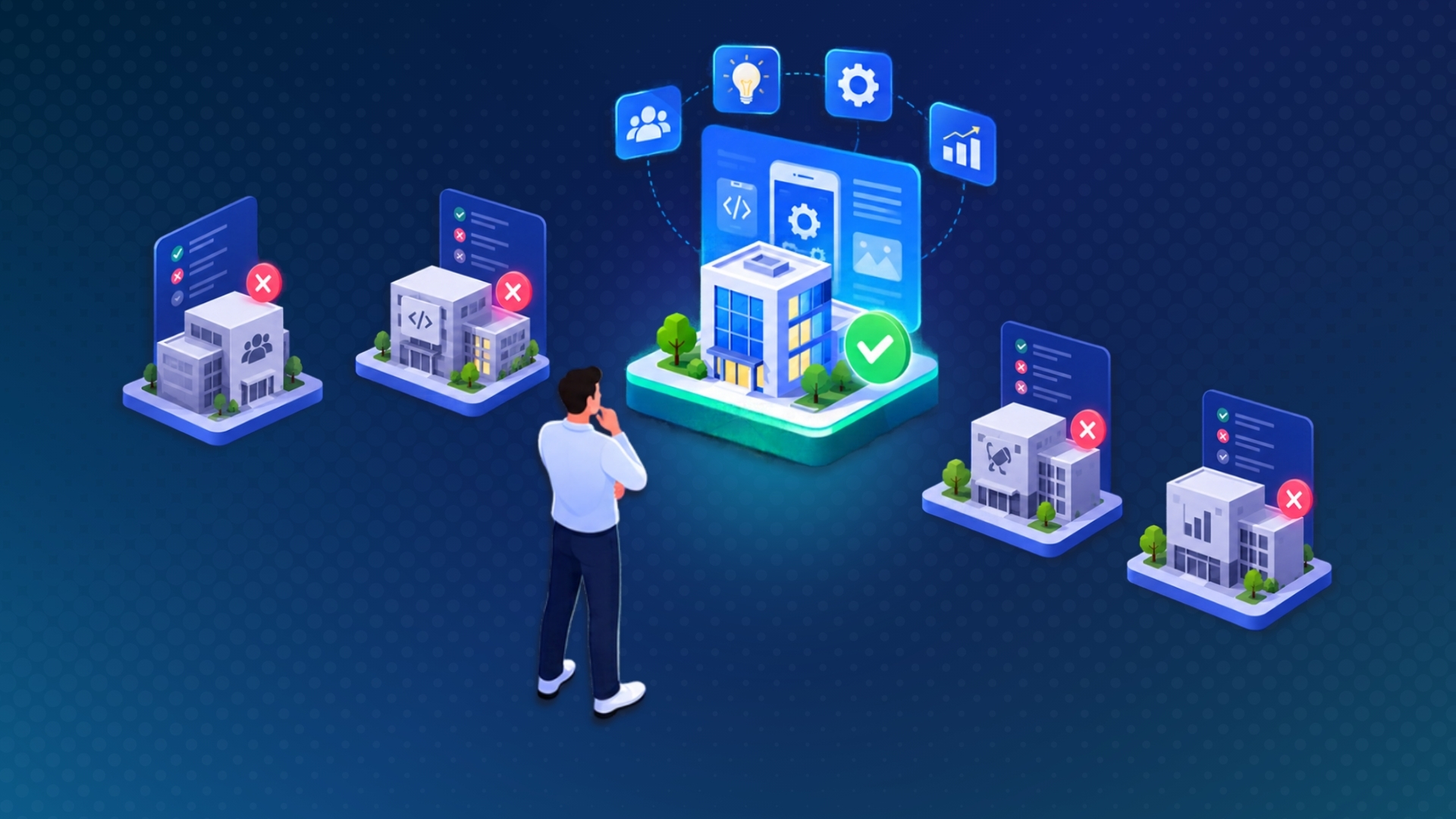
Choosing the best enterprise application development agency is critical to achieving your business goals. But this is often made difficult with the countless agencies out there claiming to have the expertise in this field. This blog highlights the areas you should look at when deciding on the best enterprise application development agency that is in line with your aspirations.
Why Your Choice of Development Partner Matters
Enterprise applications are more complicated than consumer-facing applications. With enterprise applications, there is the added complexity of integrating the application with existing systems and processes, and ensuring security, scalability, compliance and support, to name but a few.
A quality development agency is more than a writing code agency. They are a strategic technology partner who provides valuable digital solutions to the business.
Choosing the wrong agency can lead to:
- Project delays and budget overruns
- Security vulnerabilities
- Poor user adoption
- Integration challenges
- Increased maintenance costs
- Limited scalability
The right agency helps businesses avoid these risks while accelerating digital transformation efforts.
1. Evaluate Industry Experience
One of the first things to assess is whether the agency has experience building enterprise-grade applications.
Look for agencies that have worked on projects involving:
- Enterprise Resource Planning (ERP) systems
- Customer Relationship Management (CRM) platforms
- Workflow automation solutions
- Data analytics and business intelligence tools
- Cloud-native enterprise applications
- AI and machine learning integrations
2. Assess Technical Expertise
Technology is evolving rapidly, and your development partner should have expertise across modern platforms and frameworks.
Key technical capabilities to evaluate include:
Front-End Technologies
- React
- Angular
- Vue.js
Back-End Technologies
- .NET
- Java
- Node.js
- Python
Cloud Platforms
- Microsoft Azure
- AWS
- Google Cloud Platform
Emerging Technologies
- Artificial Intelligence
- Machine Learning
- IoT
- Robotic Process Automation (RPA)
- Generative AI
The ideal agency should recommend technologies that align with your business objectives rather than pushing a one-size-fits-all solution.
3. Review Their Development Methodology
A mature development process ensures transparency, quality, and predictability throughout the project lifecycle.
Look for agencies that follow:
- Agile development methodologies
- DevOps practices
- Continuous Integration/Continuous Deployment (CI/CD)
- Quality assurance and testing frameworks
- User-centered design principles
Agile teams typically provide better flexibility, allowing businesses to adapt to changing requirements without major disruptions.
Key Indicators of Process Maturity
- Defined project management approach
- Regular sprint reviews
- Automated testing practices
- Risk management procedures
- Change management protocols
4. Prioritize Security and Compliance
Enterprise applications often handle sensitive companies, customers, and financial data.
Security should never be an afterthought.
Ask potential agencies about:
- Data encryption practices
- Identity and access management
- Secure coding standards
- Vulnerability testing
- Incident response processes
- Regulatory compliance expertise
5. Examine Their Integration Capabilities
Enterprise apps rarely operate in isolation.
They often need to connect with:
- ERP systems
- CRM platforms
- HR systems
- Financial software
- Data warehouses
- Third-party APIs
Integration challenges are among the most common causes of project delays and performance issues. So choose an app development agency that has experience in developing apps that integrate smoothly with modern systems.
Choose an agency with demonstrated experience in:
- API development
- Middleware implementation
- Legacy system integration
- Data migration
- Enterprise service architecture
Strong integration expertise ensures seamless information flow across your technology ecosystem.
6. Check Scalability and Future Readiness
Today’s application needs may look very different in three years.
Your enterprise app should be designed for:
- Business growth
- Increased user volumes
- New feature additions
- Geographic expansion
- Evolving technology requirements
Ask agencies how they approach:
- Cloud scalability
- Microservices architecture
- Performance optimization
- Infrastructure management
Future-ready solutions reduce the need for costly redesigns as your business evolves.
7. Analyze User Experience (UX) Capabilities
Even the most powerful enterprise application can fail if employees struggle to use it.
Evaluate the agency’s UX design process, including:
- User research
- Workflow mapping
- Wireframing
- Prototyping
- Usability testing
Enterprise users expect intuitive experiences similar to consumer applications.
A well-designed interface improves productivity, adoption rates, and overall return on investment.
8. Evaluate Communication and Collaboration
Successful enterprise projects depend on effective communication.
Your development partner should provide:
- Dedicated project managers
- Regular progress updates
- Transparent reporting
- Clearly defined escalation processes
- Collaborative decision-making
Warning signs include:
- Slow response times
- Unclear project ownership
- Limited stakeholder involvement
- Poor documentation
Strong communication minimizes misunderstandings and keeps projects aligned with business goals.
9. Understand Their Support and Maintenance Services
Development is only the beginning.
Enterprise applications require ongoing:
- Monitoring
- Bug fixes
- Performance optimization
- Security updates
- Feature enhancements
Ask about:
- Service Level Agreements (SLAs)
- Support response times
- Maintenance packages
- Upgrade strategies
- Dedicated support resources
Long-term support helps maximize application performance and longevity.
10. Compare Cost Against Value
While budget considerations are important, selecting the lowest-cost agency can be a costly mistake.
Instead of focusing solely on price, evaluate:
- Expertise level
- Development quality
- Security standards
- Scalability capabilities
- Post-launch support
- Business impact
A higher upfront investment often results in lower total cost of ownership and greater long-term value.
Red Flags to Watch For
Avoid agencies that:
- Provide unrealistically low estimates
- Promise extremely short timelines
- Lack documented processes
- Have limited enterprise project experience
- Cannot provide references or case studies
- Offer vague security practices
Conclusion
Selecting an enterprise app development agency is a strategic business decision that extends far beyond technology. The right partner will understand your business challenges, align with your long-term goals, and deliver secure, scalable, and user-friendly solutions that drive measurable results.
By carefully evaluating experience, technical capabilities, security standards, communication practices, and support services, organizations can confidently choose a development partner that contributes to sustained business growth and digital transformation success.
In a competitive market, the agencies that stand out are not just software developers; they are trusted advisors like Sparity who help turn business vision into enterprise-wide value.
FAQs
What should I look for when choosing an enterprise app development agency?
Look for proven experience in enterprise application development, strong technical expertise, security capabilities, and integration experience.
Why is industry experience important in enterprise app development?
An agency with industry experience understands common business challenges, compliance requirements, and best practices, helping reduce project risks and accelerate delivery.
How can I evaluate an agency’s technical expertise?
Review their experience with modern technologies, cloud platforms, enterprise integrations, AI capabilities, and successful projects similar to your requirements.
Why are security and compliance critical for enterprise applications?
Enterprise applications often handle sensitive business and customer data. Strong security practices and compliance knowledge help protect data and minimize operational risks.
Should I choose the lowest-cost app development agency?
Not necessarily. It’s better to evaluate the overall value an agency provides, including quality, expertise, scalability, security, and long-term support, rather than focusing solely on price.
FAQs