AI continues to dominate the technology landscape, but successful adoption depends on more than simply adding AI features to existing products. Organizations are increasingly looking for solutions that combine intelligence, trusted data, and streamlined experiences to deliver measurable business outcomes.
The announcements at FabCon Europe 2026 reflected this shift, highlighting Microsoft’s vision for bringing data, AI, governance, and business applications together on a unified platform.
In this blog, we cover some of the most significant announcements from FabCon Europe 2026 and what they mean for the future of Microsoft Fabric.
KEY TAKEAWAYS
• Sparity recognized at FabCon Europe 2026 for its migration accelerators
• Fabric Apps expanded to Power BI Pro and PPU users
• Microsoft commits to Apache Ossie format for improved interoperability
• Semantic meaning and semantic views brought closer to the Lakehouse architecture
• DAX measures introduced as explicit metrics across semantic models
• Microsoft expands its vision for AI through Fabric IQ, MCP, and governed business context
SPARITY RECOGNIZED AT FABCON EUROPE 2026
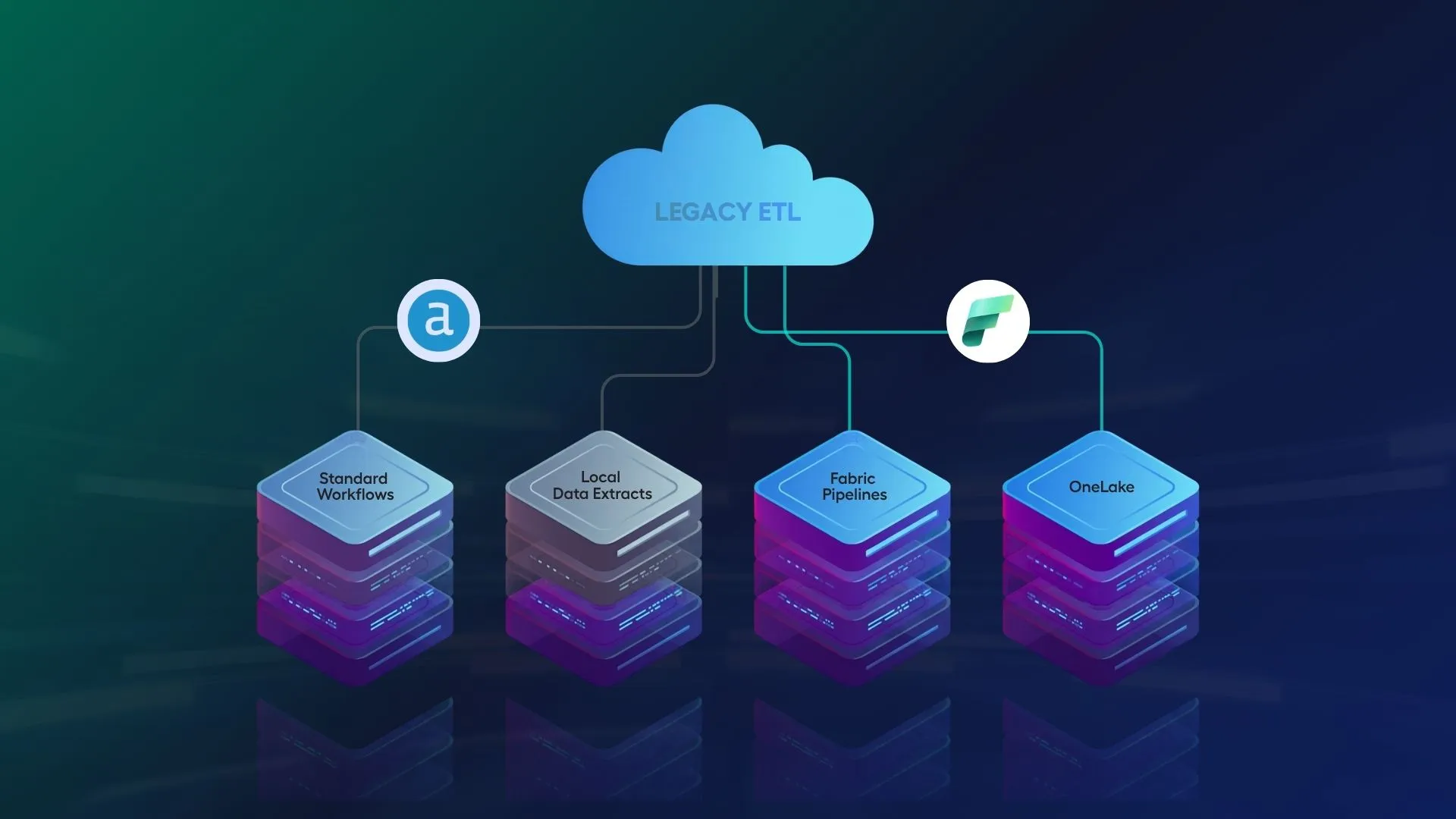
Sparity’s Tableau to Power BI Migration Accelerator and Alteryx to Microsoft Fabric Migration Accelerator were featured at FabCon Europe 2026.
This recognition highlights the growing demand for automation-driven modernization solutions that help organizations reduce migration complexity, accelerate implementation timelines, and lower transformation risks.
“Organizations adopting Microsoft Fabric need faster, lower-risk modernization. Our automation accelerators help enterprises migrate with greater speed, confidence, and efficiency.”
— Harish Cholleti, Chief Operating Officer, Sparity
MAJOR ANNOUNCEMENTS AT FABCON EUROPE 2026
Microsoft Fabric is evolving beyond a traditional analytics platform. The announcements at FabCon demonstrate Microsoft’s broader vision of connecting data, AI, governance, and business applications within a unified ecosystem.
FABRIC APPS EXPANDED TO POWER BI PRO AND PPU USERS
Microsoft is expanding Fabric Apps to Power BI Pro and PPU users at no additional cost, including Fabric Database capabilities with up to 1 GB per application.
This enables organizations to build data-driven and write-back business applications directly on trusted Power BI and Fabric data, helping bridge the gap between insights and action.
MICROSOFT COMMITS TO APACHE OSSIE FORMAT
Microsoft has officially committed to the Apache Ossie format and has already published an early two-way converter on GitHub.
This move supports greater interoperability across data platforms and reflects Microsoft’s commitment to open standards.
SEMANTIC MEANING NOW LIVES CLOSER TO THE DATA
One of the most important architectural announcements was Microsoft’s decision to bring semantic meaning and semantic views closer to the Fabric Lakehouse experience.
By enabling organizations to define business relationships, metrics, and rules closer to the data source, Microsoft is helping reduce inconsistencies that often emerge when business definitions are recreated across multiple systems.
DAX MEASURES BECOME EXPLICIT METRICS ACROSS SEMANTIC MODELS
Fabric Ontologies can now use DAX measures as explicit metrics across multiple semantic models.
This enhancement enables organizations to define, govern, and reuse business metrics more consistently across analytics workloads.
FABRIC IQ, MCP, AND THE RISE OF BUSINESS CONTEXT FOR AI
Beyond the individual feature announcements, another major theme emerged throughout FabCon Europe 2026: the importance of business context in enterprise AI.
Capabilities such as Fabric IQ and MCP (Model Context Protocol) signal a future where AI systems can move beyond simply retrieving information.
As AI agents become more capable, context, trust, and governance will become just as important as model intelligence.
CONCLUSION
While much of the conversation at FabCon Europe 2026 centered around AI agents, copilots, and generative AI experiences, the more significant shift may be happening beneath the surface.
What stood out to me was Microsoft’s continued investment in the data foundation that makes enterprise AI truly effective. Capabilities such as MCP, Fabric IQ, governance-aware experiences, semantic models, and Fabric Apps point toward a future where AI systems can do more than retrieve information.
What’s equally compelling is how these capabilities are beginning to come together as part of a broader platform vision.
As organizations move from AI experimentation to real business adoption, success will depend not only on the intelligence of the agents but also on the quality, trustworthiness, and governance of the data that powers them.
In that context, the real opportunity is not simply building more AI solutions. It’s establishing a connected, governed data foundation that enables AI to deliver meaningful business outcomes at scale. Request a demo for a Tableau to Power BI or Microsoft Fabric Migration and see data and AI in action.
FAQs
Are DAX measures explicit metrics for Fabric Ontologies?
Yes. With the latest Fabric updates, DAX measures can now be used as explicit metrics across multiple semantic models.
What was the major announcement regarding Fabric Apps?
Microsoft announced that Fabric Apps are being expanded to Power BI Pro and PPU users at no additional cost, making it easier for organizations to build data-driven business applications directly on trusted Fabric and Power BI data.
FAQs